Case Study
Construction Management During Language Barriers & Covid-19 Disruptions
Owner-side construction management for a government office project across three working languages and Covid-19 disruption.
Coordination, reporting, and verification were brought under a single control layer across contractors, consultants, and site operations despite three working languages and Covid-19 disruption. Fragmented communication, inconsistent inspection criteria, and reactive scheduling were brought under structured workflows and traceable decision-making.
Executive Summary
Fragmented communication across three languages, inconsistent inspection practices, and repeated Covid-19 disruption left a multiyear government office project in Phnom Penh without stable coordination. Construction management was imposed to structure quality verification, formalize coordination across contractors and consultants, and enforce reporting discipline despite language barriers. Over 3 years and 4 months, these controls replaced ambiguity with traceable decision-making and maintained progress through labor shortages, supply disruptions, and resequencing.
Project Snapshot
- Client
- Government Office Project (Confidential)
- Location
- Phnom Penh, Cambodia
- Contract Value
- Confidential
- Duration
- 3 years 4 months
- Services Delivered
- Construction Management, Site Coordination & Communication Management, QA/QC Oversight & Inspection, Method Statement & Shop Drawing Review, Independent Material Verification & Testing, Progress Monitoring & Schedule Alignment, Covid-19 Sequencing & Adaptation Planning, Stakeholder Coordination, Technical Reporting & Decision Support
The Challenge
The context, constraints, and risks shaping the project from the start.
The project involved diverse contractors, design teams, internal committees, and specialist vendors. Multiple working languages, inconsistent documentation practices, and varied interpretations of inspection criteria created misalignment on-site. Covid-19 disruptions introduced labor shortages, supply delays, and the need for frequent resequencing. The Owner required a structured CM system to ensure clarity, quality, and predictable progress.
Complexity
- Communication across English, Khmer, and Thai required structured documentation and translation support.
- Frequent discrepancies between drawings, methods, and on-site practice demanded coordinated resolution.
- Covid-19 caused unpredictable labor availability, requiring dynamic resequencing of works.
- Multiple committees and authorities required clear reporting and consistent interpretation of standards.
- Material quality varied significantly across suppliers, necessitating independent verification and testing.
What Was at Stake
Without disciplined oversight, the project risked inconsistent workmanship, inspection failures, non-compliant materials, and prolonged delays—especially during Covid-19. Miscommunication across languages threatened decision-making and alignment, while unclear standards risked rework and disputes. Maintaining progress under uncertainty required a robust coordination and verification system.
How Chenla Stepped In
The targeted actions we took to resolve the core issues.
A structured control layer was introduced across site communication, quality verification, technical coordination, and progress reporting. Independent material testing replaced reliance on supplier claims. Covid-19 disruptions were absorbed through formalized resequencing rather than reactive adjustment.
Key Actions
- Structured English communication enforced across all parties, supported by translation and visual documentation.
- Drawing interpretation, inspection criteria, and workmanship expectations formalized into a shared standard across all contractors.
- Construction methods, shop drawings, and testing plans required to be verified and aligned before any execution.
- Independent material testing introduced to verify supplier claims against specification requirements.
- Inspection regime formalized for design intent, specification compliance, and statutory requirements.
- Work sequences restructured and tasks redirected to local contractors during Covid-19 disruptions.
- Technical coordination centralized across contractor, designers, committees, and specialist vendors.
- Reporting discipline imposed: progress, risks, and compliance status reported to the Owner on a fixed cycle.
Framework in Action
The Canopy Framework™ principles most active on this project.
The same principles later formalized into a unified system can be seen here. With diverse contractors, committees, and three working languages, structure had to precede clarity. Standardized communication, inspection checklists, and independent testing caught issues on paper and in the lab before they reached the finished building.
Structure Before Clarity
“Define once, repeat reliably.”
Upstream Intervention
“Catch it on paper, not on site.”
Solution Highlights
What Chenla delivered to address the project's challenges.
Building a Shared Technical Baseline
We unified expectations across languages and teams by standardizing communication, drawings interpretation, and inspection criteria.
Strengthening Compliance Through Verification
Independent material testing, structured inspections, and clear documentation tightened quality control and reduced ambiguity.
Adapting Sequencing During Covid-19
Continuous progress validation and resequencing ensured work continued despite disruptions to labor and supply chains.
Coordinating Stakeholders With Clarity
We facilitated structured communication among contractors, designers, committees, and vendors, accelerating decisions and reducing rework.
Outcomes
What changed for the client as a direct result of our intervention.
Operational Results
- Shared technical understanding across all contractors and committees despite language barriers.
- Improved quality and compliance through standardized inspections and independent testing.
- Covid-19 delays mitigated through adaptive sequencing and targeted reassignment of work.
- Reduced ambiguity in site decisions through structured reporting and clear documentation.
- Higher readiness for inspections and authority engagement through disciplined housekeeping and organization.
Client Benefits
- Confidence that construction quality met national expectations and design requirements.
- Improved coordination between contractor, designers, committees, and specialist vendors.
- Reduced disruptions through early identification of risks and structured intervention.
- Clear visibility of progress, technical issues, and compliance risks.
- A more predictable and accountable construction environment despite external constraints.
PROJECT DOCUMENTATION & OUTPUTS
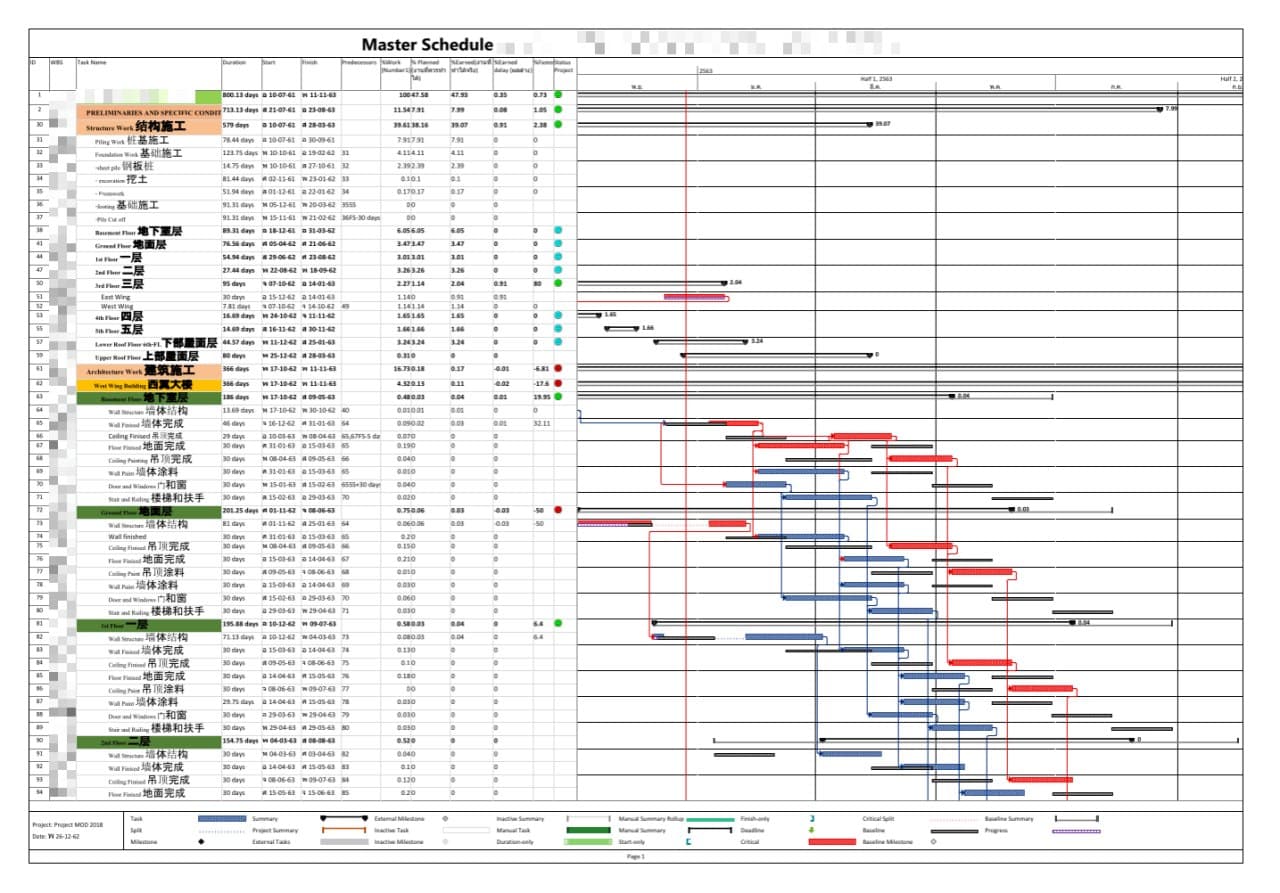
Master Schedule Overview
High-level project programme used for progress validation, resequencing, and alignment across stakeholders.
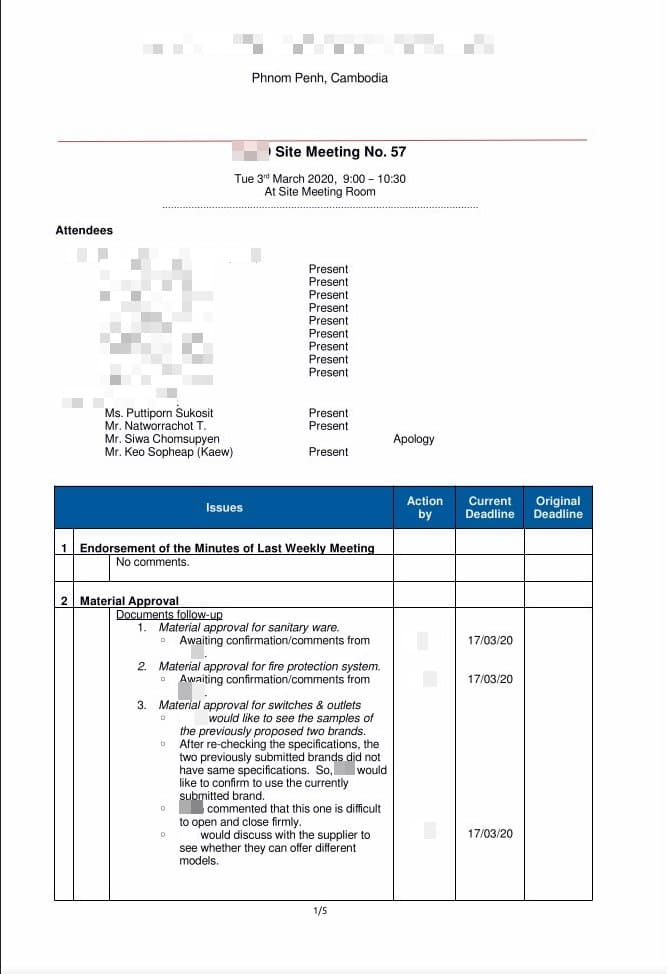
Material Approvals & Documentation
Approval forms and documented reviews of materials, shop drawings, and method statements.
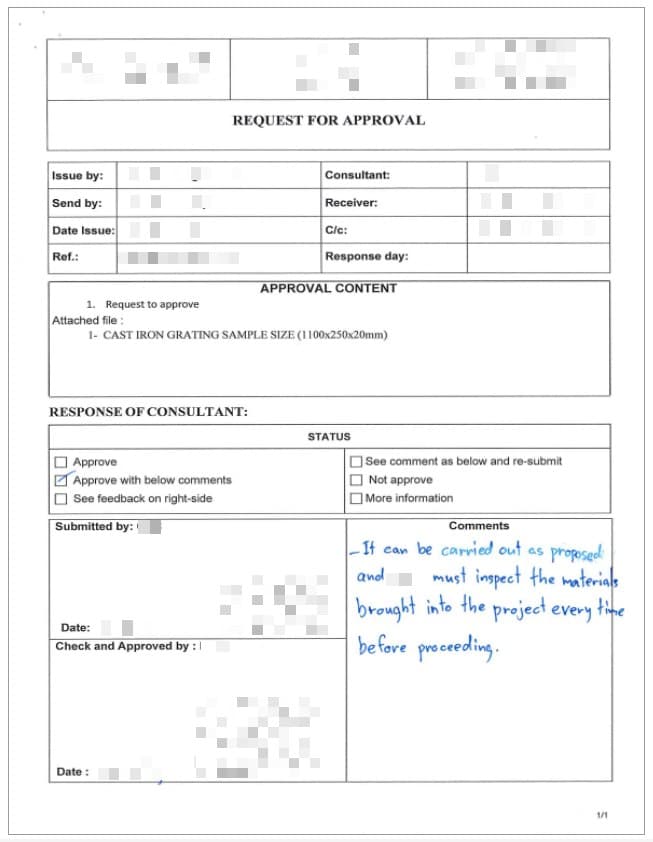
Method Statement & Shop Drawing Review
Structured evaluation of contractor submissions to ensure compliance with design intent and specification.
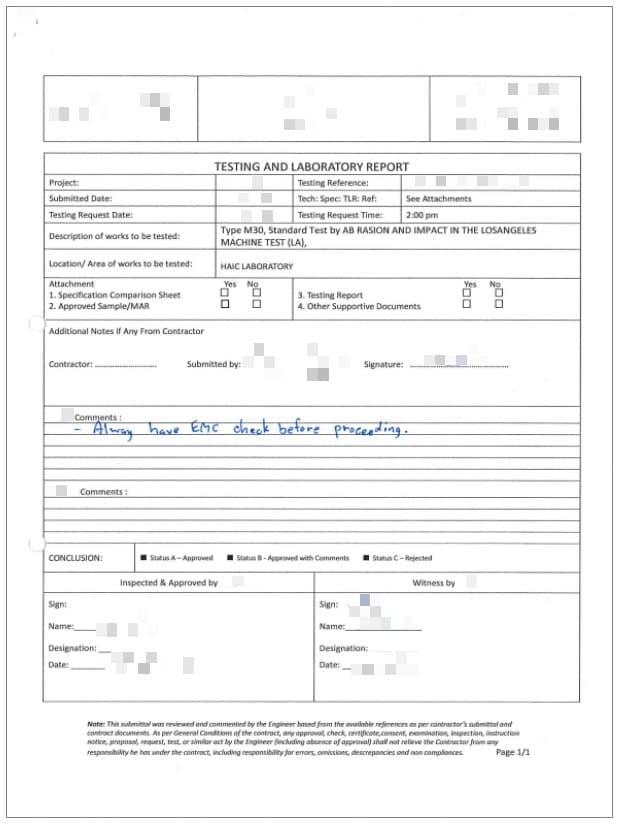
Independent Laboratory Testing
Laboratory test reports used to verify material performance beyond supplier certificates.
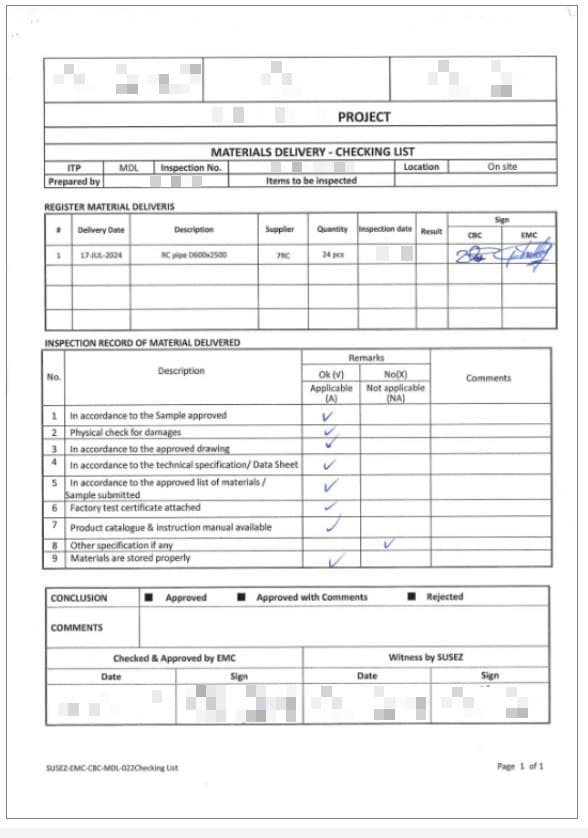
Material Inspection Checklist
On-site verification of delivered materials, including visual checks, documentation review, and compliance confirmation.
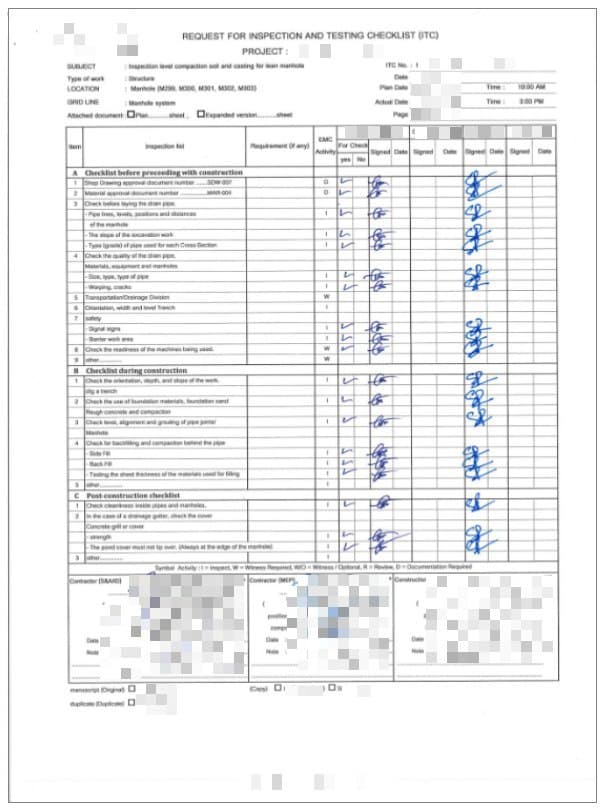
Inspection & Testing Checklist (ITC)
Structured inspection checklist ensuring works complied with drawings, standards, and approved methods.
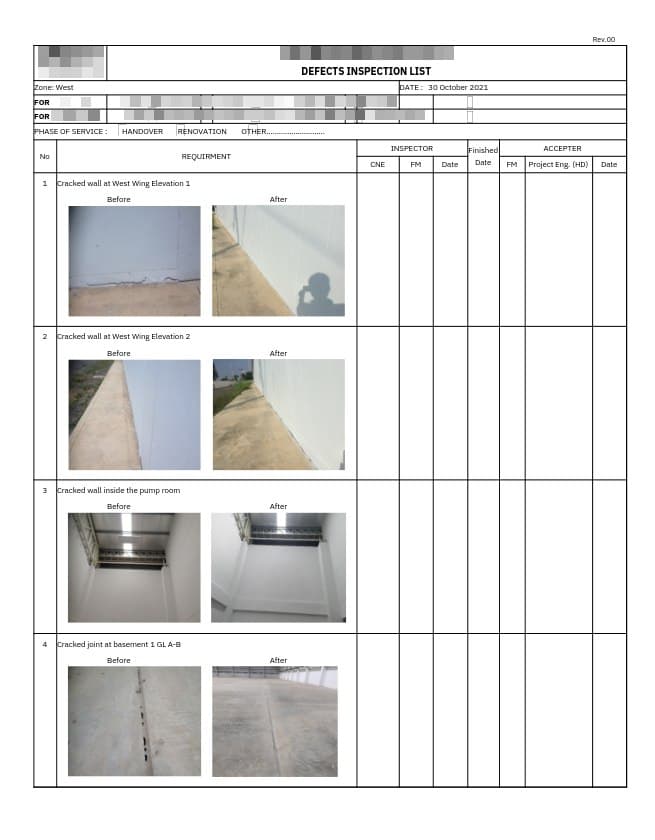
Defects Inspection Documentation
Before-and-after defect inspection records documenting corrective actions and completion with visual proof.
CM Workflow
How we structured and delivered the work from planning to handover.
Coordination, reporting, and site execution were structured through defined routines covering communication, verification, progress monitoring, and documentation. These routines held under uncertain and disruptive conditions.
Communication & Coordination
- Structured English communication supplemented with translation and visual clarification.
- Daily coordination across contractors, designers, committees, and specialist vendors.
- Decision documentation to reduce ambiguity and prevent rework.
QA/QC & Compliance Control
- Review of shop drawings, methods, and testing plans before execution.
- Frequent site inspections for workmanship and compliance.
- Independent material testing to validate specifications and performance.
Progress Monitoring & Sequencing
- Continuous validation against the master schedule.
- Adaptive sequencing to manage Covid-19 disruptions.
- Identification of delays and presentation of recovery options.
Documentation & Reporting
- Clear reporting to the Owner on progress, issues, and compliance.
- Documentation of decisions and inspection results for traceability.
- Support for committees and authorities through organized technical evidence.