Quantity Surveying
Cost drifts when it is estimated once and never verified again. We keep the budget aligned with the actual design, actual scope, and actual commitments at every stage of the project.
Why Cost Control Matters
Cost overruns follow a pattern: scope changes valued after the fact, variations accumulated without assessment, and procurement decisions made against unreliable data.
- Budget set at concept stage and never reconciled as the design evolves
- Variations approved without cost or programme impact assessment
- Tenders evaluated on price alone because the BOQ was too vague to compare properly
- Final account disputes because valuations were not tracked and documented throughout
What We Control
Cost Baseline and Estimation
- Budget built from measured quantities, not allowances or assumptions
- Cost checked against design at each stage so drift is caught early
- Market benchmarking against local rates and recent tender data
- Cost plan updated as scope evolves, not frozen at concept
Procurement and Tender Control
- BOQs detailed enough for fair and comparable tender evaluation
- Tender packages structured for transparent bid analysis
- Bid clarifications managed to ensure like-for-like comparison
- Recommendation reports with clear rationale, not just lowest price
Variation and Contract Management
- Every variation valued before approval, with cost and programme impact stated
- Payment claims reviewed against measured work, not contractor assertions
- Cash flow forecast maintained and updated on a fixed cycle
- Cost reporting issued with committed cost, forecast, and variance clearly stated
Final Account and Close-out
- All costs reconciled against contract, variations, and measured work
- Disputed items negotiated with documented evidence trail
- Final account settled with full audit documentation
How Cost Is Controlled
Measurement, valuation, and verification run on a fixed cycle. The budget stays aligned with the current design and current commitments because cost is checked at every stage, not summarized at the end.
- Cost plan updated at each design stage so the budget tracks the actual scope, not the original assumption.
- Variations valued and impact-assessed before they are approved, not after they are built.
- Payment valuations verified against measured work on site, not contractor claims alone.
- Cost reports issued on a fixed cycle with committed cost, forecast to completion, and variance analysis.
- Escalation triggered when cost trends indicate the budget is at risk, before the overrun is locked in.
Canopy Framework
Continuous Visibility
Cost is not a number set at the start and checked at the end. It is tracked continuously so decisions are made with real financial data, not outdated estimates. Every commitment, variation, and forecast is visible at all times.
“Silence is not neutral.”
Learn more about our approachHow Financial Information Flows
Cost data is only useful if it reaches decision-makers in time to act on it. Reporting runs on a fixed cycle so financial status is never a surprise.
- Cost reports issued on a fixed cycle with committed, forecast, and variance figures
- Variation register maintained with status, value, and approval state
- Cash flow forecast updated as commitments and valuations change
- Budget risk flagged when trends indicate potential overrun
Selected Case Study
Cost control on a special economic zone project under real procurement and contract management constraints.
Case Study
Sovannaphum Special Economic Zone – Quantity Surveying Support
Quantity surveying for a 204-hectare economic zone across 25 contract packages and 8 contractors.
Cost control, contract administration, and variation management were fragmented across 25 packages and 8 contractors. A structured commercial system was imposed, covering measurement, payment certification, and change control. Cost and contract data became traceable from first valuation to final account.
Executive Summary
A 204-hectare economic zone in Kandal Province required delivery of 25 contract packages across eight contractors. The client lacked a consistent approach to measurement, valuation, and payment certification, leading to unclear cost positions and delayed approvals. A centralized commercial structure standardized bill formats, valuation methods, and reporting. Interim and final accounts aligned to a single system, reducing disputes and establishing traceability.
Project Snapshot
- Client
- Confidential industrial developer
- Location
- Kandal Province, Cambodia
- Site Area
- 204 hectares
- Contract Value
- Approx. USD 10 million
- Duration
- Multi-phase infrastructure programme
- Services Delivered
- Cost planning, BOQ and tender support, Contract administration, Payment certification, Variation assessment, Final account
The Challenge
The context, constraints, and risks shaping the project from the start.
The client needed to deliver core civil and infrastructure systems for a new economic zone, including roads, drainage, sewage networks, medium-voltage power distribution, street lighting, telecoms, water and reuse water networks, pumping stations, and treatment facilities. These works had to support early tenants while allowing future expansion.
Complexity
- 25 contract packages delivered by 8 contractors.
- Contractors and tenants from five nationalities requiring coordination.
- Different contract forms and documentation standards across packages.
- Material price instability requiring validation.
What Was at Stake
Without intervention: cost uncertainty, delayed certifications, and unclear liabilities.
How Chenla Stepped In
The targeted actions we took to resolve the core issues.
Engagement began post-award, inheriting a fragmented, pre-tendered package structure with limited commercial alignment.
Key Actions
- Structured all packages under a unified measurement and valuation approach.
- Standardized BOQ formats and measurement rules across contractors.
- Implemented a centralized tender process for supplementary works.
- Established monthly payment certification procedures with defined review and approval steps.
- Enforced variation control through formal instruction, tracking, and valuation records.
- Introduced centralized cost tracking.
- Reconciled final accounts with documented close-out records.
Framework in Action
The Canopy Framework™ principles most active on this project.
The cost control principles later formalized into the Canopy Framework can be seen here. Across 25 contract packages and 8 contractors, a centralized dashboard maintained a single source of truth for payment status and costs. Standardized bills of quantities and consistent measurement rules clarified cost positions and reduced disputes.
Continuous Visibility
“Silence is not neutral.”
Structure Before Clarity
“Define once, repeat reliably.”
Solution Highlights
What Chenla delivered to address the project's challenges.
Structuring a Complex Package Framework
Structured 25 packages into a consistent commercial structure, aligning scope boundaries and valuation methods.
Establishing Valuation Frameworks
Defined measurement rules and valuation formats used across all contractors.
Digital Contract Administration
Centralized instructions, approvals, and payment records.
Closing Out with Confidence
Structured final account reconciliation with documented adjustments and traceable records.
Outcomes
What changed for the client as a direct result of our intervention.
Operational Results
- 25 contract packages structured and documented.
- Standardized payment certification across contractors.
- Clear valuation basis for claims.
- Traceable variation and final account records.
Client Benefits
- Reduced disputes during interim and final account stages.
- Faster payment certification cycles.
- Verified cost positions.
- Complete audit trail from first valuation to final account.
PROJECT DOCUMENTATION & OUTPUTS
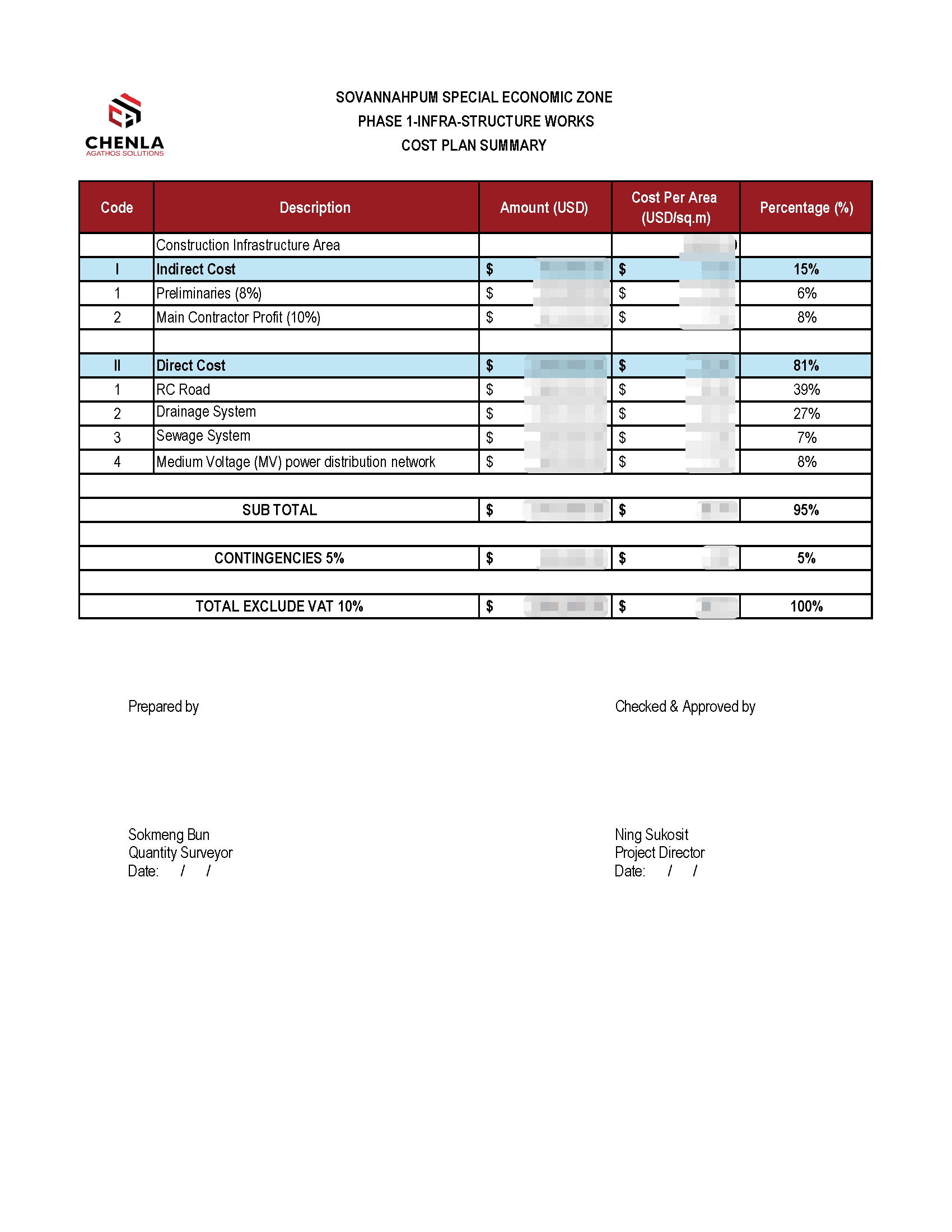
Cost plan summary
High-level cost breakdown used to set initial budgets for all infrastructure systems.
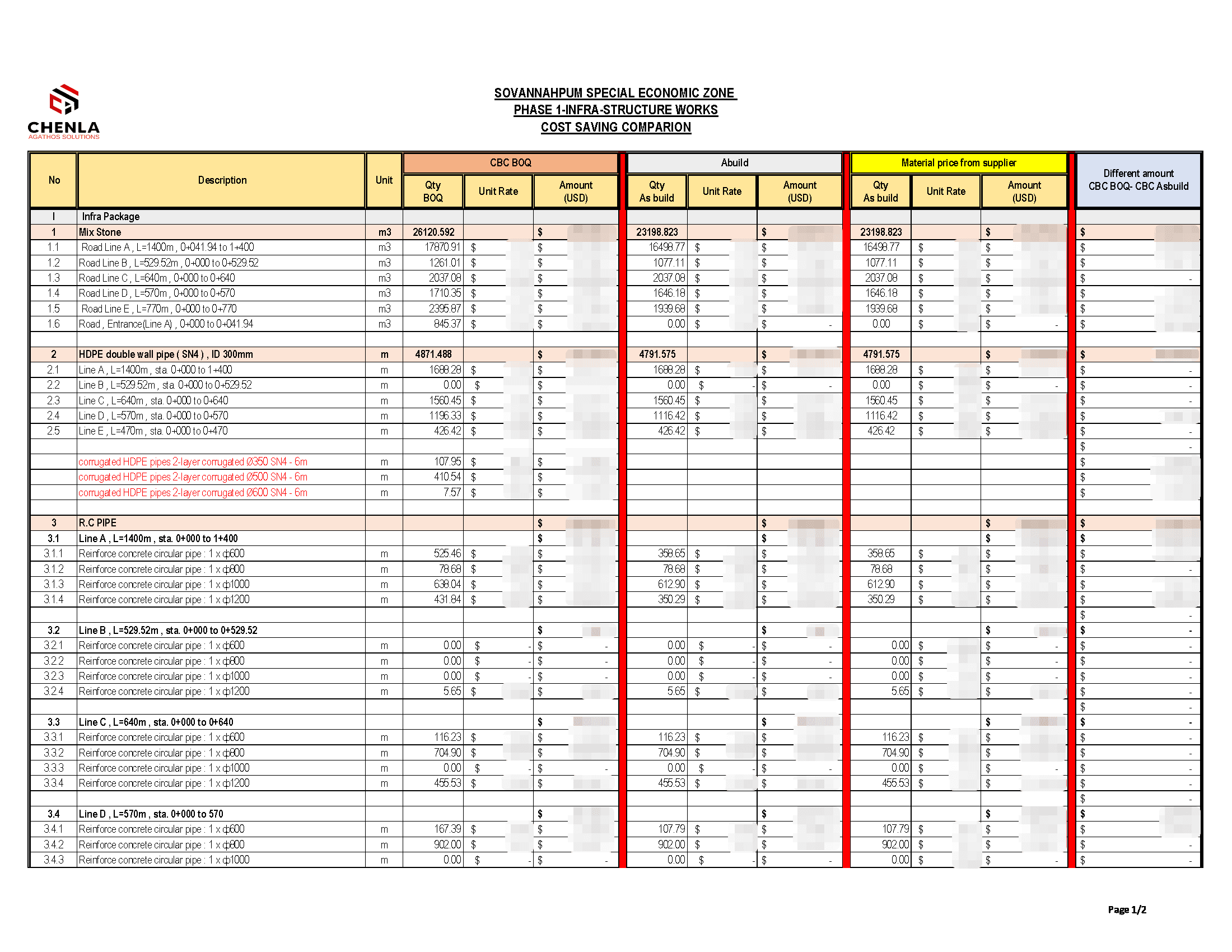
BOQ and tender comparisons
Comparison of BOQ quantities against as-built quantities.
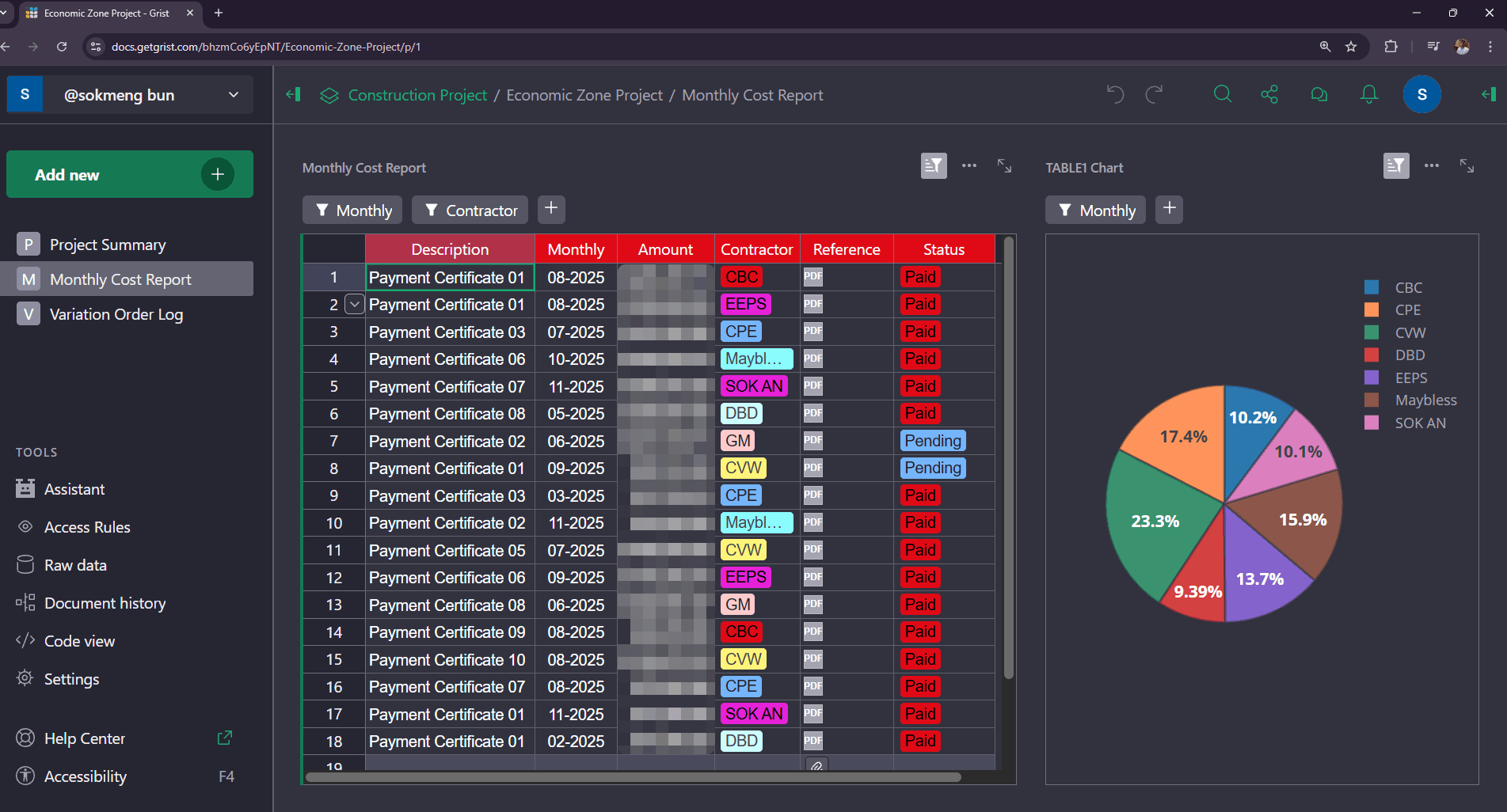
Monthly progress dashboards
Summary of IPCs, attachments, allocations, and paid/unpaid status.
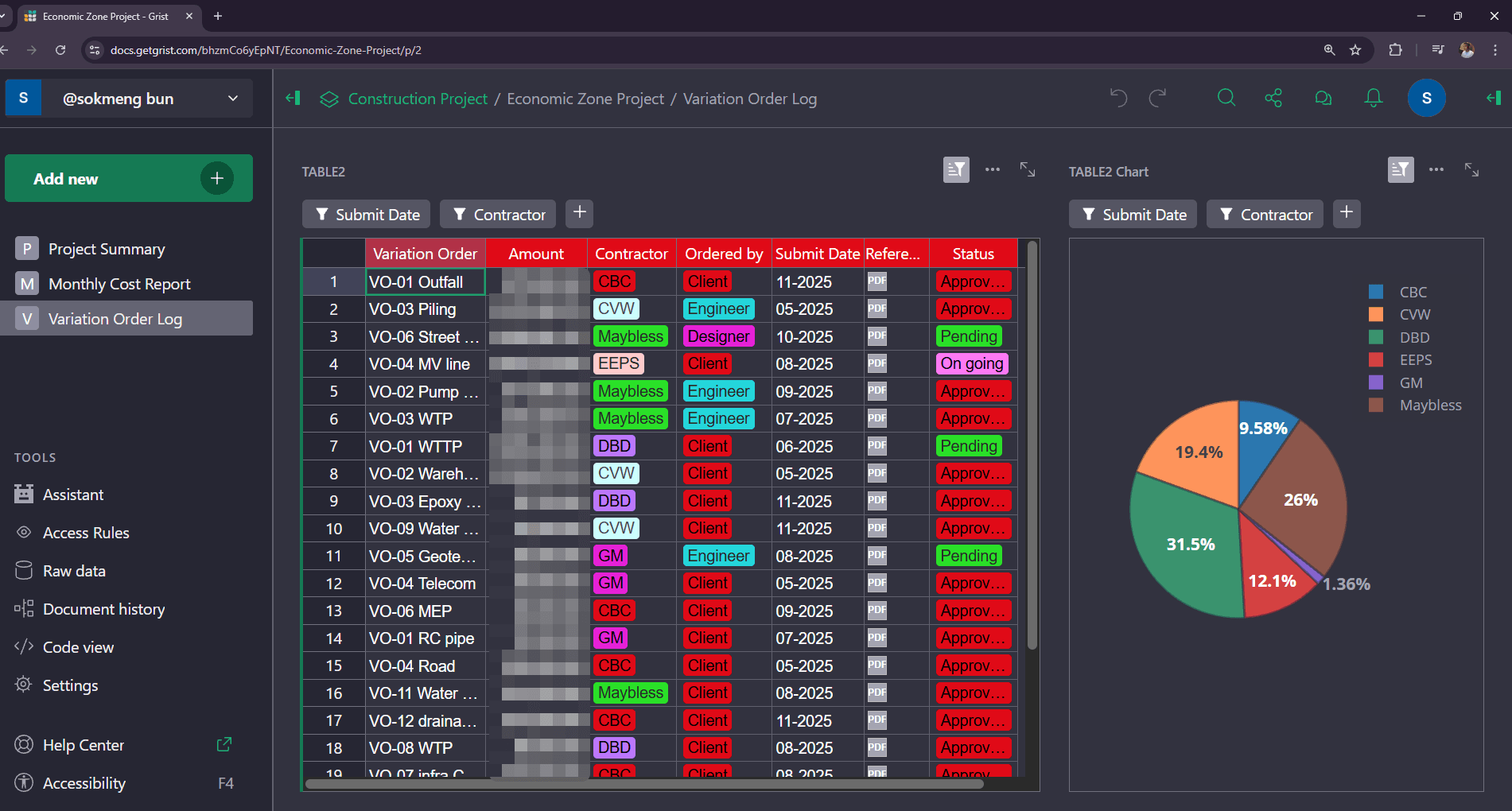
Variation order dashboards
VO log showing cost exposure, approval status, and change origins.
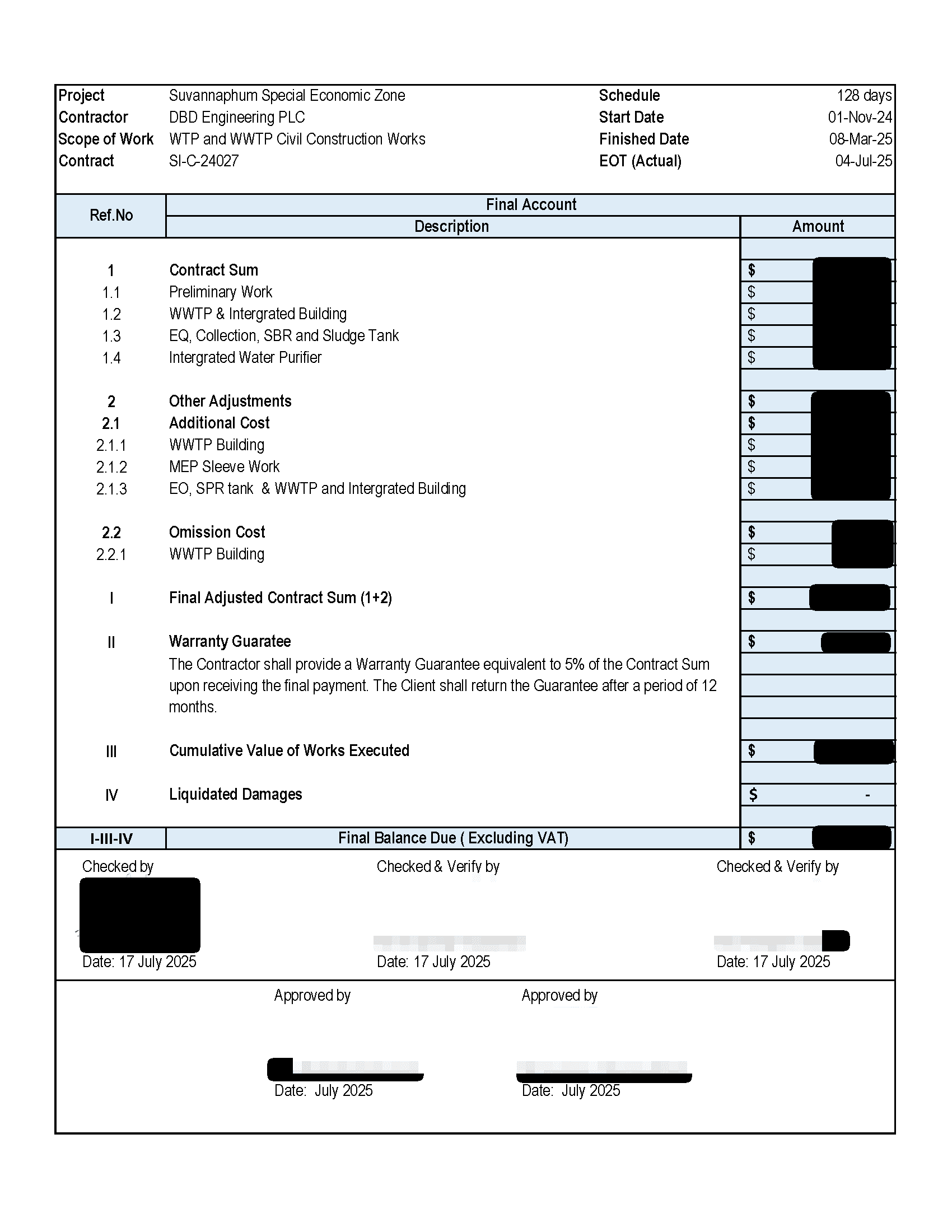
Final account summaries
Reconciled final account including variations and executed works.
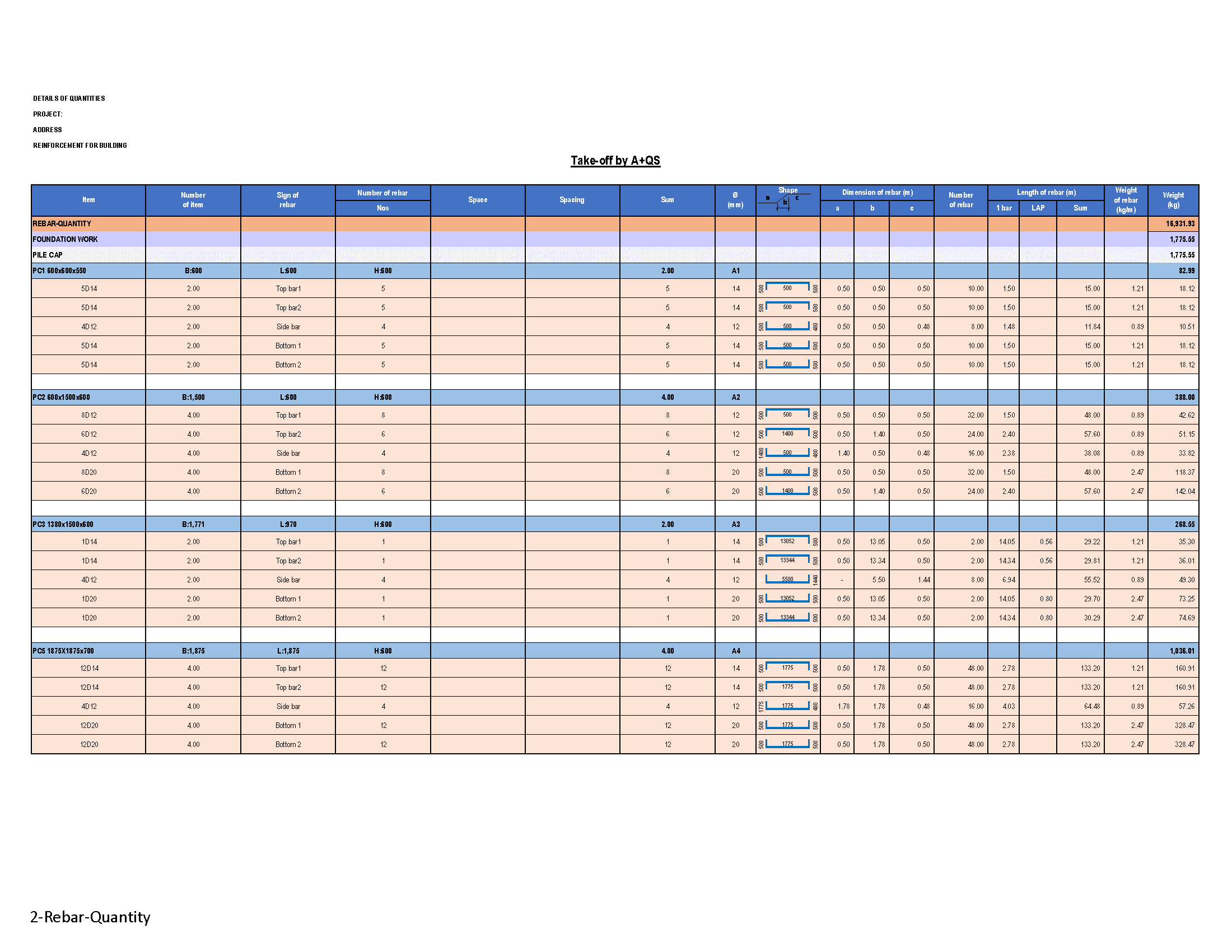
Quantity take-off working files
Reinforcement take-off linked to CAD using A+QS.
QS Workflow
How we structured and delivered the work from planning to handover.
Cost verification and contract administration followed a sequential process from measurement to final account.
Inputs, Scope Review & Measurement
- Defined measurement rules and formats.
- Confirmed quantities and validated site conditions.
- Performed take-offs using standard QS tools.
BOQ & Cost Plan Management
- Developed consistent BOQ structures.
- Benchmarked unit rates.
- Identified scope gaps and provisional risks.
Procurement & Supplementary Tender Support
- Managed tender documentation for additional works.
- Prepared comparisons and clarified submissions.
- Supported evaluation and award decisions.
Contract Administration
- Assessed and certified monthly payment applications.
- Applied agreed measurement and valuation rules.
- Maintained cost records and approval workflows.
Change Control & Variation Management
- Evaluated variation scope and cost impact.
- Maintained variation logs and tracking.
- Updated cost forecasts.
Cost Forecasting & Final Account
- Maintained rolling cost forecasts.
- Prepared interim and final account reconciliations.
- Closed contracts with documented agreements and records.
Start with a cost review
Share your project scope or current cost position. We will identify where cost control, procurement, or variation management need strengthening. We respond within one working day.